Showing posts with label knitting. Show all posts

Tuesday, 12 April 2011

Vintage Means Modern


Vintage Modern Knits
Courtney Kelley and Kate Gagnon Osborn

In A Nutshell: More modern than vintage but contains 20 pretty patterns with intricate details suitable for an experienced knitter.

“Vintage Modern” appears to be the buzz phrase of the moment, creeping into all manner of home decor, fashion and craft books. It appears to mean a judicious mixing of old and new items, or the reworking of a design from another era to suit a more modern style ethos. This book falls more into the latter category and is distinctly more modern than vintage. The “vintage” element is simply the incorporation of historical knitting techniques such as fair isle, lace and cabling into the knitting designs. Perhaps the most accurate description of this book is it’s subtitle “Contemporary Designs Using Classic Techniques”.

Although I think the title is jumping on the Vintage bandwagon, this should not detract from what is a very pretty collection of twenty patterns. They are divided into three seasonally themed collections – “Rustic Weekend”, “Vintage Feminine” and “Winter Harbour” – including a variety of sweaters, scarves, hats and gloves. No degree of difficulty is indicated, and with the level of detail incorporated, patterns are probably most suited to an experienced knitter. There are also one or two very useful knitting tips interspersed with the patterns, such as how to do a sloped bind off.

The pictures are attractive but would have made even more of an impact with a more cohesive colour palette.

I like this book but feel it is a little beyond my knitting expertise at the moment.   


Monday, 11 April 2011

A Knitting History Lesson


Knitting Fashions Of the 1940s
Jane Waller

In A Nutshell: Fascinating historical account of knitting but patterns lack detailed instruction and size range by modern standards

The strength of this book lies in the fascinating historical detail that fits knitting into the historical context of the 1940s. Against a background of the Second World War women were exhorted to “knit furiously for the men at sea, since everyone owes a personal “thank you” to the Royal Navy for magnificent services”.  With this as inspiration, a couple of the men’s knits featured in the book are “Submarine Jersey” and a cabled sweater “For The Long Hours On Night Duty”. The war also influenced women’s fashion as styles were geared to give the impression of strength with broad shoulders and a tough adult appearance.

Authentic 1940s designs are made with pure wools in a fine ply so are not quick knits. In the 1950s there was a move to synthetic yarns on larger needles. The designs in this book have been adapted to use modern yarns and sometimes a style modification such as lengthening the welt. There are some very desirable patterns but the instructions frequently only give details for one size.  Without a schematic , it is difficult to work out whether a design will fit or be flattering to your figure. These issues have been addressed in Jane’s later book “A Stitch In Time”.

I enjoyed reading this book, and looking at the pictures, but do not have enough confidence in the patterns to make something.

Sunday, 27 March 2011

1980s Vintage


The Edina Ronay Collection

In A Nutshell: Gorgeous 1980s knitting patterns that with a few tweaks could still be made and worn today.

Apparently “vintage” is something more than twenty years old, so this book from 1988, acquired from my local charity shop, now falls into this category. I was fascinated to look at these patterns and see how they had dated. Compared to current knitwear designs, Edina’s designs are generously loose-fitting with wide sleeves. Though many remain covetable, and with a few tweaks, could still be worn today. I love a long-line tennis sweater, reminiscent of the 1920s, and will definitely be making this at some point in the future. The Aran knits and Fair Isles are also undeniably classic, and will probably remain wearable for time immemorial.

In fact I was surprised to find that if the sleeves and body are made narrower, I believe most of the styles in this book could be worn today. I will certainly be revisiting this book frequently for patterns and inspiration.

The start of the book gives a fascinating glimpse into Edina’s own history and style inspirations. When I looked her up on the internet I discovered her recently launched website where you can buy her current knitwear creations. They are gorgeous and it would be wonderful if Edina could publish some of these current designs as knitting patterns.

In the meantime, I’ll have to settle for Vintage Edina.

Friday, 25 March 2011

Patterns Not So Fine


Knit So Fine

Lisa R. Myers, Laura Grutzeck, Carol Sulcoski

In A Nutshell: Pursuasive encouragement and tips for knitting with skinny yarn but only a few of 21 patterns worth making.

At the start of this book, the authors make a very persuasive case for using “skinny” yarns. They argue they enable a better fit, are more flattering, patterns are more attractive and are cheaper. I’m sold already. Incidentally, for the purposes of this book, fine yarns are classed as anything thinner than worsted weight. This seems to be rather a wide scope as I’m not sure I’d think of double knitting as a skinny yarn.

Anyway, amidst the encouragement to make fine garments are some excellent knitting tips. This includes a list of the author’s favourite skinny yarns (I thought I could also crib from this for my crochet projects). There is good advice for using stitch markers. I had not thought to mark increases/decreases at the edge, but if the marker is left in place, this will assist greatly when sewing seams together. The authors advocate patience with finishing and Carol does a seam a day. I think that is a policy I will be adopting in future. There are several tips on staying motivated when knitting with fine yarn such as measuring progress every few days, not in hours.

Then there are 21 patterns featuring a range of accessories and clothing. I have to admit they didn’t exactly fire my imagination, though they do receive reasonable feedback on Ravelry, so this is just my opinion. They are grouped into four categories – Simplicity, Speed, Style, and Shine. The only ones I liked were in the “Style” section including a wrap dress, an on-trend bamboo knit tubular skirt and a layered look sweater, one sweater giving the look of two worn together.

So in short, a useful read but the patterns are not for me.

Friday, 18 March 2011

For Cushion Lovers Only


Glamour At Home
Erika Knight

In A Nutshell: Glamour mainly means cushions in 15 stylish knits for the home with a vintage vibe.

This is a slim volume containing 15 knits for the home. The “Glamour” element is in the choice of high quality yarns, a subtle colour palette, and luxurious details such as beads, sequins and bows. There is a vintage vibe coming through in the photos, perfectly suiting the mood of the moment.

I am not keen on the way this book is set out. Pictures of all the projects are grouped together, with all the instructions placed at the back of the book. I would much rather have picture and pattern together, so I can quickly see the yarn details and how complicated it is to make. I find it annoying to have to keep flicking backwards and forwards.

The patterns are attractive but cushions do predominate. Two designs for a jacquard and a knot stitch cushion certainly couldn’t be out of place in any upmarket interior design emporium.

If you are looking for a cushion pattern, this book may be for you, but look elsewhere for a greater diversity of projects.

Knitting A Piece Of The Past


A Stitch In Time
Jane Waller and Susan Crawford

In A Nutshell: Vintage fashion meets knitting in a lovely book bringing the past to a modern audience

A truly luscious book that will enchant anyone interested in Vintage fashion, not just knitters. It’s based on a 1972 book which contained 100 original knitting and crochet patterns from the 1920s to the 1940s. Unfortunately the original draft of the book was destroyed in a fire so it was not possible to have it reprinted. Instead the book has now been recreated with a selection of 60 patterns reworked in contemporary yarns. As a bonus there is also a two for the price of one as the original pattern sits side by side with the modern reinterpretation.

Each decade of patterns begins with a brief introduction to its key style elements. For example the 1920s sweater was designed to conceal. It abolished the bosom and ignored the hips, by hanging like a sack from the neck to just below the hips. The main part had to be an easy to knit stitch and made in one long strip, and was often given shape and lightness by the addition of a lacy crocheted border in a more complex stitch. Low necks were often edged with a firm line of crochet.

It’s great fun identifying your decade, style wise, and which will most suit your figure. I love many of the styles, but know they would not be particularly flattering. As I’m slightly top heavy and short waisted, short boxy sweaters with high necklines and exaggerated sleeves are not for me. I would still consider making some of the patterns, but would modify the original design to make it more figure flattering. The book contains lovely photos with each garment styled to capture the essence of the era.

My first make from the book is to be the 1920s inspired crochet knit lace edged tunic.

One minor quibble is that none of the patterns have been assigned a level of difficulty, so I’m not sure how challenging some of the knits are. Equally wool weights have not been provided, making it harder to select a substitute.

I believe part two of this book is coming out shortly. I can hardly wait.

Seasonal Knitting


Inspired To Knit
Michele Rose Orne

In A Nutshell: An attractive book showcasing 19 seasonally inspired women’s knits with lovely colours and stitches but proportion and shape does not always work.

This is a good looking book with a fresh modern feel. The 19 women’s knitting patterns are grouped by the seasons, the time of year providing both the inspiration and colour palette for the designs. This is all delightfully illustrated by a mood board at the start of each section.

The patterns are interspersed with 4 workshops designed to help you find the inspiration to create your own designs. These basically cover creating a mood board, building a colour palette, creative swatching and creating a schematic to be able to knit up your design.

I enjoyed the inspiration aspect but am not entirely won over by the actual garments. Stitch patterns and motifs are very pretty but I felt the shapes of the clothes did not always work. The amber beaded cardigan looked better as a cropped bolero in its original sketch, rather than the long line version knitted up. The wedding dress proportions just don’t look right.

So for me, colour and stitch pattern were spot on but the shapes needed a rethink.

Not Enough Pictures


Weardowney Knit Couture
Henry Conway and Gail Downey

In a Nutshell: Interesting patterns but let down by unclear photos and a potted history of knitwear design written in a pretentious style.

I think this book is aimed at knitwear design students. It is written in a rather pretentious faux-academic style, so it is not a fluid easy read.

Half of the book is devoted to the history of knitting and short profiles of prominent knitwear designers. Although interesting, a lack of appropriate illustration is a major flaw. A few pages are devoted to the achievements of Chanel and Schiaparelli, the first two designers to truly incorporate knitwear into fashion design. Several of their groundbreaking designs are described but not illustrated. It would have made far more sense to show a picture, even if this was just a sketch.

The latter part of the book showcases 20 knitting patterns from design team Gail Downey and Amy Wear.  Unfortunately the arty photos do not show the designs clearly. There is a project gallery at the back of the book with more straightforward photos, but these are too small. It’s a shame as the designs are appealing and it would have been interesting to see the stitch patterns in more detail. I like their use of lurex and would like to make their vest top and stripe tunic.

The blurb claims the how to knit instructions provide the first time knitter with everything she needs to know. This is in fact a very limited amount of information, and I’m sure a beginner would need far more instruction to successfully knit a garment from the book.

This could have been a lovely book – the concept is good – but it is let down by its execution.

Thursday, 17 March 2011

Classic With A Twist


Classic Knits
Marianne Isager

In A Nutshell: Solid book of knitting patterns with quirky twists

I think the title of this book is a misnomer – something more accurate would have been “Quirky Knits”. They are the invention of Danish Knitwear designer Marianne Isager with 20 patterns for men, women and children.

They are interesting designs but relatively simple. Each pattern starts with a swatch guide, ensuring the garment will be knitted to your exact requirements. The patterns are interspersed with useful advice on knitting techniques such as colour stranding, intarsia and adjusting a design for your own size.

I liked many of the textures and stitch patterns but wasn’t entirely enamoured with the colour schemes. I thought the single coloured, textured knits worked the best. My fave designs are the man’s fisherman sweater, Cossack cardigan and the Corsage vest top.

This is one of those books to which I have a neutral reaction – it’s not without interest but I couldn’t wholeheartedly recommend it.

Colour Clashes and Bodged Beads


25 Beaded Knits
Debbie Abrahams

In A Nutshell: Outrageous misuse of beads in clunky patterns with in your face colour schemes

I love a bit of sparkle so I’m always on the hunt for attractive beaded patterns. I didn’t find any here! The term “Beaded knits” makes me imagine delicate ethereal designs in soft muted shades. Instead Debbie gives me solid chunky knits in garish colour schemes with hundreds of random beads thrown in for good measure.

This book includes a variety of patterns for home furnishings, pattern accessories and garments. Unfortunately I didn’t like any of them. The beads are generally plonked on haphazardly, rather than being an intrinsic part of the design. This is further exacerbated by their incorporation with unpleasant clashing colours. There are such lovely complementary yarns out there, why couldn’t Debbie use them? The evening bags are the only patterns where the beading is used with any success.

There is a fair isle vest where Debbie blithely states: “ You will be noticed out on the streets if you wear this funky, fair isle vest.” You certainly would, but for all the wrong reasons. It’s guaranteed to make you a candidate for “what not to wear” columns.

I will say something positive about this book. Debbie explains the technique of knitting with beads extremely well. But you will be well advised to look elsewhere for your patterns.

Anyone with a modicum of style or fashion sense should avoid this book.

Monday, 7 March 2011

Knitting In Black And White


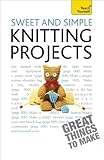
Sweet and Simple Knitting Projects
Sally Walton

In A Nutshell: Useful, well-written book with fifteen easy projects for a novice knitter, but black and white format fails to inspire.

I am generally a fan of the Teach Yourself Books and have found their titles on French and Article Writing very useful. Unfortunately the format is not quite so effective for crafts. Knitting is a strongly visual activity and needs visual stimulation. This is a little paperback book on cheap paper with grainy black and white photos. When I took the time to read the content, I found it well written with good advice. There is also a fascinating section on the history if knitting.

It’s aimed at beginners with how-to-knit instructions and fifteen easy patterns. Though strictly speaking this is fourteen as I don’t consider a garter stitch scarf a pattern.  The projects include a hot-water bottle cover, a bag and some hats, quick knits that would make good gifts. Without a colour photo showing the finished articles, they fail to inspire. There is a jeans style hat which is probably quite cool, but a black and white picture does not make me want to knit it.

The book includes some good internet links and interesting tips. I learnt that running needles through my hair will help the yarn slide along better. But although I learnt some useful stuff, it’s not a book I will be returning to.


Friday, 4 March 2011

Too Many Flowers


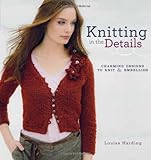
Knitting In The Details
Louisa Harding

In A Nutshell: 24 simple knits embellished with embroidery, beading and appliqué that may have limited appeal

I love Louisa’s introduction to this book where she explains the inspiration behind it. She has a desire to collect stuff that sparkles or glistens then use these finds to add a special detail, a finishing touch that will make an item truly unique. In a world of instant availability, it’s time to recreate forgotten crafts. On this basis, I was expecting some very special pieces and unfortunately I didn’t feel they came up to my expectations.

This book contains 24 projects, mainly simple knits, where the interest comes from adding beading, appliqué and embroidery. There is one really standout piece, a very pretty lace and beaded edge bolero which I’d love to make. But apart from this, little else appealed. I thought some of the items would have looked better without embellishment. Of course, this is all a matter of personal taste, and I’m sure some people will love lots of stuff in this book.


Thursday, 3 March 2011

Vintage Modern


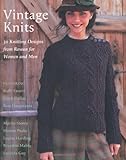
Vintage Knits
Rowan

In A Nutshell: 31 vintage inspired designs for both men and women with modern twists and interesting styling details

This book perfectly captures the mood of the moment with a love for all things vintage. It features designs inspired by the 40s, 50s and 60s, adapted for modern figures using Rowan wools. There are 31 patterns; seven are for men, featuring top Rowan designers including Kaffe Fassett, Kim Hargreaves and Louisa Harding.

I counted up and there are actually eight patterns I would consider making, so considered this a quite good return on the current cover price, as I would be paying around a £1 a pattern.  Amongst the designs I wasn’t so keen on, I picked up little styling details that would work with other garments. I liked an eyelet neckline and ribbon tie.

All the knitwear is beautifully styled with complementary vintage clothes and accessories. Each piece has a little information about the inspiration behind it and even some styling tips as to how to wear it.

The designs make extensive use of tweed wools to good effect. Many of the designs for women are little fitted cardigans with interesting detail. My absolute favourite was a little belted jacket worked in off-white tweed with red intarsia floral motifs.

I’ve borrowed this book from the library but may have to buy it.


Wednesday, 2 March 2011

Knitting By Design


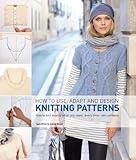
How To Use, Adapt And Design Knitting Patterns
Sam Elliott and Sidney Bryan

In A Nutshell: Modern fresh layout and well explained method of knitting design let down by unattractive examples.

This book has had some quite sniffy reviews on Amazon, but I rather enjoyed it. To start with, there is a fresh, clean modern appeal in the layout, making it an attractive book to read. With regards to content, it breaks down into three distinct sections. Firstly how to use shop bought patterns, then how to create your own patterns, and thirdly how to change and adapt a pattern.

The most successful part is undoubtedly how to create your own knitting pattern. I found the author’s method fascinating.  They use an existing garment as a starting point, and this does not necessarily need to be a knitted item. To demonstrate the method the authors use a T shirt, taking you from measurements, through creating a tension swatch, converting this to stitches and rows, making a paper pattern and using this to create a toile. I found the instructions well described and feel I would be able to successfully use their method.

Their fusion of sewing and knitting particularly appealed to me, though I understand a non-sewer would probably not like this method of design. I am inspired to look through my wardrobe and see whether I have a garment that will translate to a knitted item.

The main failing of this book is that the examples used to demonstrate the techniques are unappealing. The one exception is the cover, a simple A line cardigan with cabling detail. I was disappointed that this was not included as a pattern with the book. I suppose I will just have to follow the author’s instructions and design it myself.


Tuesday, 15 February 2011

Chunky Knitting


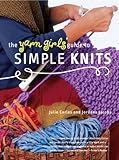
The Yarn Girls’ Guide To Simple Knits
Julie Carles and Jordana Jacobs

In A Nutshell: Simple knitting patterns in chunky wool that may suit a beginner looking for super fast results.

I really enjoyed the “Yarn Girls’ Guide to Beyond The Basics” so I was motivated to hunt out their earlier work. Unfortunately this didn’t impress me quite so much.

This book is firmly aimed at beginners with 30 patterns in simple shapes covering pullovers for both men and women, hats, scarves, ponchos and throws. There are also basic instructions for how to knit, though I felt there were some important omissions. For example the Yarn Girls only give one method of casting on and do not explain how to join a shoulder with the three needle bind off.

The projects are designed to be quick and easy with chunky wool knitted on big needles. This may give fast results but I don’t think many of the designs would be very flattering for an average sized woman. In the book the items are displayed on a dummy, rather than a real person.
The Yarn Girls suggest you could start a project on Saturday and wear it to work on Monday morning. I think I’d rather forgo such instant gratification to make something in a thinner yarn that actually suited me. The chunky approach does work for some accessories such as the scarves. Though I feel the pattern included with  a basic garter stitch is something a child could invent.

I do appreciate their technique of using two or three yarns together to create interesting textured colour schemes. This is something I will definitely do in the future, but perhaps with 4 ply wool.


Wednesday, 2 February 2011

Knitting Up Instant Gratification


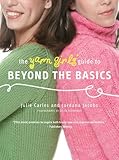
The Yarn Girls Guide To Beyond The Basics
Julie Carles and Jordana Jacobs

In A Nutshell: 34 fun, stylish patterns knitted in chunky yarn for quick results

I know when I’ve enjoyed a book when I immediately looked to see if the author’s have written anything else. Fortunately The Yarn Girls have obliged so I have already ordered their earlier work “The Yarn Girls Guide to Beyond The Basics” from the local library. Thanks to the wonders of Ravelry I was also able to check out their complete knitting oeuvre.

This book is entitled “Beyond The Basics”, but none of the designs are particularly difficult. Furthermore, they are knitted on large needles with chunky wool, so they are as close to instant gratification as knitting can get. 34 patterns cover a variety of pullovers, cardigans, ponchos, hats, scarves and blankets. They are excellent simple styles with a twist, exactly the sort of stuff I like to knit. I’ve picked out a striped cardi, A-Line pullover, and flared hat as future projects. What really endeared me to this book, was the little intro to each pattern, describing the person who had inspired the design.

I do have some criticisms. Some of the information could have been provided in a more understandable format. I’d normally check for bust measurement to determine which size to knit. Here the width was given, e.g. 17.5”, so it was necessary to double this figure to find the correct size. Only three sizes are provided for each pattern, so they are only suitable for standard sized people. The weight of the yarn isn’t given, so it isn’t simple to work out a possible substitution. It would also have been useful if more help could have been provided in how to adapt a pattern. I’d frequently like a sweater shape, but would like to change a neckline.

Saying all this, I still love The Yarn Girls and look forward to seeing more from them.


Tuesday, 25 January 2011

Woolly Inspiration


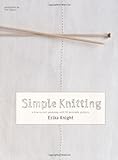
Simple Knitting
Erika Knight

In A Nutshell: Beautifully illustrated how to knit book with patterns that progressively build on skills

I recently reviewed “Purls Of Wisdom” by Jenny Lord, so I was interested to compare it against this one by Erika Knight, as both are aimed at teaching beginner’s how to knit. I think I would have been able to teach myself from either book as they both clearly explain the basics.  Erika’s book is much more lavishly illustrated which for me gives it that inspirational edge. The photos of knitting samples in lovely, natural earthy shades appear almost touchable, and motivate you to immediately pick up your needles.

“Simple Knitting” contains 20 patterns designed to progressively build on skills. This means starting out with a garter stitch scarf and ending with a very desirable classic ‘V’ neck cardigan. Projects are given a 4 scale difficulty rating, but even the “experienced” knits could be tackled by a relative beginner with patience and help.

Jenny’s book has a less desirable, more random collection of patterns, many intended to be gifts. However, she does but provides better background information on knitting as a craft, and some very useful internet resources.

Erika’s book will inspire the novice knitter by its strong visual element, whereas “Purls Of Wisdom” is more about the text. I don’t think either would disappoint a beginner.


Tuesday, 14 December 2010

Colouring In


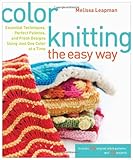
Colour Knitting The Easy Way
Melissa Leapman

In A Nutshell: Fascinating colourwheel theory and  colour combination advice but lack lustre patterns.

I borrowed this book from the library, hoping to find some advice on intarsia knitting. Instead I discovered “The Easy Way” means using only one colour in each knitted row. My disappointment at not learning more about changing colours turned out to be short-lived. Instead I found fascinating explanations of creating colour combinations using colour wheel theory. There are great tips for creating patterns using two, three or four different colours. I tend to prefer easy-on-the-eye monochromatic colour schemes of the same hue, but I may now be encouraged to create more dramatic combinations.

Melissa also gives very good advice on creating harmonious stripes. Maths phobics may be alarmed when they find this means using the “Fibonacci Sequence” and the “Golden Mean”. Rest assured, in practice this is very simple and produces aesthetically pleasing stripes.

I will also be using her suggestion to gather together pictures of colour combinations I like, and transfer some of the ideas to knitting projects.

This book excels in its explanation of colour theory and knitting techniques. I feel it is let down by the ten knitting patterns. This was a fantastic opportunity to showcase some stunning colour combinations but they are distinctly underwhelming. Not one of the patterns inspired me to pick up my needles.


Friday, 3 December 2010

Only Wise For New Knitters


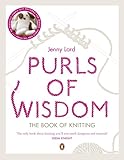
Purls Of Wisdom
Jenny Lord

In a Nutshell: An ideal book for someone new to knitting but not enough information for those wanting to develop their skills

I have seen excellent reviews for this book, so I was disappointed when I initially picked it up. My favourite craft books have lovely paper and gorgeous photos, and this has neither. It is also written in a light hearted style which I am sure many people will love, but I’m afraid I found rather irritating.

I am sure my negative response stems from the fact that I can already knit, and this book is strongly targeted at a beginner. All the basics are explained very well indeed, and should enable a novice to start knitting. Besides how to knit, the book gives a brief history of knitting, provides some patterns and provides a selection of knitting resources. I found some of these very useful. Her list of favourite yarns, blogs, and shopping sites enabled me to make some delightful new discoveries.

The patterns are all designed to be gifts. I found them a little dull, but they are perfect for a beginner.

This book is not for me – I much prefer Debbie Stoller’s knitting work: Stitch 'n Bitch Handbook: Instructions, Patterns, and Advice for a New Generation of Knitters


Thursday, 25 November 2010

Knitting Expert-Ease


Stitch ‘n Bitch Superstar Knitting
Debbie Stoller

In A Nutshell
: Advanced knitting techniques explained with flair and humour, accompanied by 41 fun patterns

I ordered this book from Amazon back in March so it’s been a long wait. Was it worth it? Probably.

I’m the perfect target audience for this book. I’ve mastered basic knitting skills and are tentatively exploring the brand new worlds of multiple colours, lace, cables, and perhaps even creating my own designs.

I’ve taught myself many crochet techniques from Debbie Stoller’s “The Happy Hooker”, and find her a brilliant teacher in both knitting and crochet. Her explanations are very easy to follow, and humorous prose a joy to read.

This book has three main sections – one covering stitch techniques, secondly how to create your own patterns, and lastly 41 patterns illustrating many of the techniques covered in the first section. As I am in the midst of knitting an intarsia cardigan, I read the intarsia chapter in detail to ensure I was doing everything correctly. I was relieved to find I was doing nothing fundamentally wrong but I picked up some great tips. I learnt I should work with short lengths of yarn. With 100% wool I could “spit splice” yarn together to join in a new piece of yarn. When adding in a new colour it’s a good idea to leave ends dangling from the front, rather than the back, so they do not become tangled up with the yarn in use. I was also relieved to learn that my loose stitches near the colour changes are unavoidable and the only solution is to manually adjust each individual stitch. This one chapter alone has been worth the price of the book. I will be consulting the other chapters on cabling, beading, lace, stranding and stripes as I need them.

There is a good selection of patterns but none have jumped to the top of my “To Do” List. They are all styled very prettily, though it would have been nice to see some of the designs on older models. The bios of the contributing designers are always fun to read.

My first impression of this book is that it is a good addition to my knitting library, and I will be using it extensively to develop my knitting skills.