Monday, 31 January 2011

A Little French Chic

 
In A Nutshell: Uses embroidery to create timeless French style with challenging, intricate and complex designs
Another charity shop find – they are such a wonderful source of interesting books, often far superior to current publications. I had difficulty even finding this book on Amazon – there wasn’t an image available.
My copy of “The Embroidery Book” was first published in 1989, but I think it was originally published in France around 1980. Una Stubbs comments in her delightful introduction, how true style never dates, and these eye-catching embroidery designs aptly demonstrate the truth in that statement. More than twenty years after publication, the patterns still look amazing.
The book is divided into three sections – the first contains canvas work, the second has designs for clothing and the last section is all about home-furnishings. Many of the designs are stunning. My only reservation is that they would represent something of a challenge in reproducing their intricacy and complexity. The instructions lack detail, and give more of a sketchy overview, rather than a step by step approach. I love some colourful fish designs, but you have to copy the stitch work from a photo, there isn’t a clear diagram. But this still wouldn’t stop me giving them a go. Other designs that caught my eye included a countryside mosaic, ethnic flowers and fall of leaves. Anyone completing some of the patterns in this book would have a treasured heirloom piece.
This book not only has dazzling designs but shows how embroidery has a breadth of uses – applications include bedspreads, cushions, bags, dresses, rugs and tablecloths. There is a charming project called “Celebration Time” which involves creating a romantic dining area with ethereal designs on net. Trust the French to combine sewing style with romance.

Friday, 28 January 2011

Dreams Required


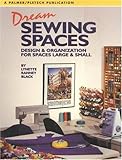
Dream Sewing Spaces
Lynette Ranney Black

In A Nutshell: Full of practical ideas to create a sewing space but short on visual inspiration.

You will need to bring your own dreams to the sewing table, this book is all about problem-solving,, not inspiration. The author is a certified kitchen designer and her practial side dominates over creativity.

This book was originally written in 1996, and it does feel dated, both in its layout and imagery. Saying that, ignore the photos, and the content it very helpful.

It will be most useful to someone starting their sewing room from scratch. Lynette teaches you how to analyse your needs and space, selecting an area for your work, whether this be the end of a hallway, corner of a dining room, or an island space. The author’s interior design credentials are on display as she suggests correct work heights and storage levels, choosing appropriate furniture, lighting and electrical factors, and what to put on your floors and walls.

The storage and organisation chapter has many tips, and offers several different options. For example, a multitude of ideas are given for storing patterns.

If you want visual inspiration for a creative space, I’d suggest “Where Women Create”. Then “Dream Sewing Spaces” will help you make it happen.


Thursday, 27 January 2011

Endless Inspiration


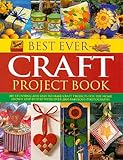
Best Ever Craft Project Book
Edited by Lucy Painter

In A Nutshell: Hundreds of craft ideas to suit all tastes and skill levels

I found this book in a charity shop for the absolute bargain price of £1.50, less than the price of a Sunday newspaper. It contains a mammoth 300 projects, organised into seven crafting groups including paper crafts, stencilling, embroidery, appliqué, modelling, woodwork and decorating glass.

With so many projects stuffed in, understandably some of the instructions are quite sketchy. However they will satisfy a range of skills, many easy enough for a child, others requiring the painting ability of a Picasso. There are some very innovative ideas. I remember doing paper mache on a balloon as a child. Here it is reinvented in a stylish modern way to create a jug resembling a modern Italian ceramic.

As a bonus, the book includes a great selection of templates that will have a multitude of uses, not necessarily the one applied in the project. A fish motif is used on a painted tile, but could equally become an embroidery pattern

This is a brilliant book to flick through for ideas. If anything, there is too much choice, as I’m finding it difficult to settle on one project


Wednesday, 26 January 2011

Not A Fit For Me


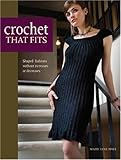
Crochet That Fits
Mary Jane Hall

In A Nutshell: Hit and miss crochet patterns shaped with different height stitches

Mary Jane states her aim is to create fitted and fluid crochet designs without the need to do any shaping. She achieves this by making stitches of varying heights on the same row. 33 designs, including bags, headbands, belts, dresses and tops illustrate the system.

There are some interesting patterns, but the choice of colours and styling fails to “sell” the designs. A striped sleeveless turtleneck sweater has been made in a truly awful stripe combination. You need to be able use your imagination to visualise different colours and wools.

I bought this book specifically for the baby-doll top pattern. I made the top half without any problem. It’s made in one piece, using crochet in the back loop only, to create a bodice that will stretch to fit around the bust. This worked well, and was easy to adjust for a good fit. Problems arose when I commenced the lacy lower half. The graduated effect is achieved by starting with double crochet and working up to double trebles. How I hated making those double trebles. And I didn’t like the overall effect at all. I don’t abandon many projects, but this is one of them.

I had more success with the flared tweed hat, albeit using a non tweed yarn. The graduated technique worked better here. I quite like the finished hat, though it’s a little floppy, and I intend to add a band, rather than the flower used in the pattern.

Personally I don’t have any problems in shaping crochet the normal way, and prefer it to Mary Jane’s method of different stitch heights. But I’m pleased to have learnt the technique, and may come back to it in the future.


Tuesday, 25 January 2011

Woolly Inspiration


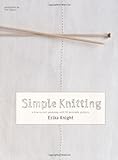
Simple Knitting
Erika Knight

In A Nutshell: Beautifully illustrated how to knit book with patterns that progressively build on skills

I recently reviewed “Purls Of Wisdom” by Jenny Lord, so I was interested to compare it against this one by Erika Knight, as both are aimed at teaching beginner’s how to knit. I think I would have been able to teach myself from either book as they both clearly explain the basics.  Erika’s book is much more lavishly illustrated which for me gives it that inspirational edge. The photos of knitting samples in lovely, natural earthy shades appear almost touchable, and motivate you to immediately pick up your needles.

“Simple Knitting” contains 20 patterns designed to progressively build on skills. This means starting out with a garter stitch scarf and ending with a very desirable classic ‘V’ neck cardigan. Projects are given a 4 scale difficulty rating, but even the “experienced” knits could be tackled by a relative beginner with patience and help.

Jenny’s book has a less desirable, more random collection of patterns, many intended to be gifts. However, she does but provides better background information on knitting as a craft, and some very useful internet resources.

Erika’s book will inspire the novice knitter by its strong visual element, whereas “Purls Of Wisdom” is more about the text. I don’t think either would disappoint a beginner.


Monday, 24 January 2011

Knitting Through The Seasons


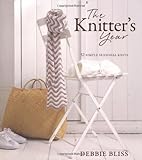
The Knitter’s Year
Debbie Bliss

In A Nutshell: Seasonal stash busting ideas but wide variability in the quality of the patterns

I love the concept of this book – a knit for every week of the year. Consequently the 52 projects are divided into four seasonal groups, and intended to be doable within seven days.

The issue I have is that by keeping to this strict timescale, some of the ideas hardly amount to a genuine pattern. There is a pompom garland which simply constitutes making five pompoms. Another, a belt, is basically a knitted strip in garter stitch. Admittedly this has the addition of a ribbon which elevates it into a more interesting design, so becomes a good way of using up oddments of wool.
Debbie has been lazy with several of the designs and not given them enough thought. Saying that, with so many projects in the book, several of the knits are bound to appeal. My particular favourites are the striped gloves, beret and lacy scarf.

This is a good book to flick through for stash busting or gift ideas, but there are not enough good patterns for me to want to buy it.


Friday, 21 January 2011

Creating A Paper Mountain


Make Your Own Clothes
Marie Clayton

In A Nutshell: Classic patterns that can be custom-sized, but require patience to print out and use.

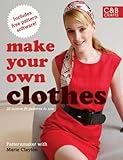
I’d forgotten I even owned this book, until I recently came across it on my bookshelves. It basically contains 20 patterns (two are for children). These are divided into four sections, with progressive levels of difficulty. So the first chapter is an introduction to basic seams and gathers, starting with a simple wrap skirt. The last section has moved onto tailoring with a final project of a shawl collared jacket.

The patterns are basically classic shapes so wouldn’t appeal to anyone with high fashion aspirations. I am tempted to make a few, including a beret, tailored blouse, and tie front tunic.

Both the advantage and drawback to this book is the patterns are provided on a CD. This enables you to enter your own measurements and create custom fit patterns. Unfortunately you then have to print out the patterns yourself and stick all the sheets of paper together.

I tried printing out the beret pattern, on the basis that would lose the least amount of paper. The software is reasonably easy to use, though not entirely intuitive. There is the opportunity to move the pattern pieces around to minimise pattern usage. Fabric requirements are provided but you need to work out your own pattern layouts. I think a beginner would struggle without help so this book would most suit someone with some sewing skills.

Now I’ve rediscovered this book, I will be using it, even if it’s just to make the beret.


Thursday, 20 January 2011

Visual Magic


Where Women Create:
Book Of Inspiration

Jo Packham and Jenny Doh

In A Nutshell:  Stunning photos and practical tips for designing a creative workspace

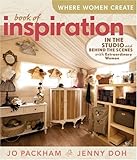
This book is for any woman who has dreamed of a personalised creative space of her own. It features an eclectic mix of knitters, painters, designers and assorted artists from around the world and peaks into their working world. This is a visual Viagra with luscious photos to stimulate the imagination.

But the accompanying text also provides practical tips from each of the featured artists on organisation, and exercises for fuelling creativity. It was interesting to note that different artists would often have the same suggestion. It may sound prosaic in a creative environment, but several mentioned that having deadlines (real or artificial) imposed structure and kick started creativity. Many also said they liked to keep their working materials on display for constant visual inspiration. As an exercise to fuel creativity, an oft repeated suggestion was to design for a character from a film, show or TV programme.

Dip into this book at random and experience serious lifestyle envy. A treasure trove of ideas to plunder for your own use.


Wednesday, 19 January 2011

Laudable But Lacklustre


How To Use, Adapt and Design Sewing Patterns
Lee Hollahan

In A Nutshell: Useful but uninspiring book providing the know how to make a selection of pattern alterations.

I think a good craft book should provide both nuts and bolts of the practical skills required, but also inspire with desirable projects that you itch to start. Lee Hollahan succeeds with the first, but fails with the second.

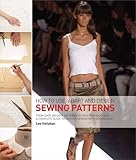
Admittedly she covers some very useful ground. The first section deals with basic sewing kit, choosing fabric and using a commercial sewing pattern. It takes you through pinning, marking and cutting out. There are instructions how to make basic pattern alterations such as altering the bust at the seams and changing trouser length. This is all something of a whistle-stop tour, but would suit a beginner.

Lee then moves onto designing your own patterns using blocks, either commercial ones, or scaling up the gridded ones included with the book. She demonstrates how to fit a toile, and make more advanced pattern alterations. These are not exhaustive. For example, the advice on increasing the bust area differed from other methods I have seen.

The most interesting part of the book is the section on adapting the basic block to design your own patterns. Lee provides guidance for various style variations such as changing bodice darts into seams, creating a half circle sleeve and adding a yoke to a skirt.

This is a book I will be referring to occasionally, but is unlikely to become a well-thumbed favourite.


Tuesday, 18 January 2011

Too Many Crafts Spoil The Book


Home Guide To Craft
Katherine Sorrell

In A Nutshell: A craft taster with projects of widely varying standard for thirty different crafts.

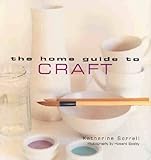
This is a fat craft reference book covering 30 different crafts. The majority are traditional – quilting, appliqué, soap making, paper mache – but there are a few surprises. How about shibon? Apparently this a Japanese word for resist dyed textiles, so more prosaically is just tie-dying. Each of the crafts starts with a shorted potted history of its origins, followed by two projects, designed by a specialist in that particular field. Photos accompany all the step by step instructions.

The projects vary widely in their desirability. I love an abstract silk painted scarf, but the felt table runner is dreadful. I decided to have a go at a beaded cuff. Basically this involves sewing beads onto calico backed ribbon. My local John Lewis didn’t sell the square shaped beads used in the book, so I picked out some bugle beads in a sophisticated steel grey/blue colour. It’s an easy project but requires patience to sew all the beads and I used far more than anticipated. I have to admit this is a work in progress, but so far, so good. I just wish I had used a slighter wider ribbon, as the beading tightens up the width.


With so much crammed in this book, I am not convinced there is enough information for some of the crafts to enable a beginner to successfully complete the project. Some require a daunting list of materials and would be prohibitively expensive for a beginner without knowing at the start if you will enjoy that particular craft.

I think this book would have benefited from a list of resources – perhaps a list of recommended books to take a craft further, and some good websites.

A nice addition to a craft library but not one of my favourites.


Monday, 17 January 2011

Stuck Firmly In The Past


Embroidery Companion
Alicia Paulson

In A Nutshell: Cute embroidery ideas but strictly for an old-fashioned girl

I enjoyed embroidery whilst at school, and often thought I’d like to give it another go. But I would like to produce something modern and current. I picked up Alicia Paulson’s book searching for inspiration. Her work is sub-titled “Classic designs for modern living” but I have to say the use of the word “modern” in connection with this book is a serious contravention of the trades description act.

Her ideas, although undeniably cute, are seriously old-fashioned. Of course, this could be a positive bonus for someone looking to create something with a vintage feel. They sit uncomfortably with my own style aesthetic. Traditional designs work when given a contemporary twist, but these are stuck firmly in the past.

From a practical perspective, three types of embroidery are included – decorative, counted cross-stitch and crewel work. There are 30 projects, graded by three skill levels.

This book may suit if you want traditional old-fashioned embroidery, but it didn’t make me want to pick up my needle.


Friday, 14 January 2011

Learning To Freestyle


Essential Crochet
Erika Knight

In A Nutshell: Good selection of crochet projects but some require a serious colour re-think


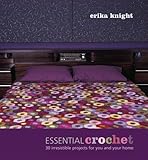
Erika Knight is one of my yarn heroines and her earlier book “Simple Crochet” is one of my faves. This book is wider ranging in both its content and colour palette. I personally prefer the more subdued shades and textures of “Simple Crochet” as it gave the whole book a harmonious feel. The colours in “Essential Crochet” are much more random. Some, like the dark sombre cover, showcasing the patchwork throw, even veer on the unpleasant.

Although you may have to imagine the projects in different colours, there is still an excellent selection to choose from, themed by “Basic”, “Timeless”, “Contemporary”, “Heirloom” and “vintage”. There are several I want to make, particularly the tote bag, textured aran throw, appliqué flowers, corsage pin, and stylish beaded handbag. Erika ably demonstrates the style and versatility of crochet so most people will find something they like.

I have been crocheting for around four years but this book introduced me to a new concept – “freestyle crochet”. This is an assortment of motifs linked together in a random way to create a unique fabric. The technique was used to great effect in a blueprint pattern for a Freeform Camisole. When I’m feeling particularly creative this is definitely a project I’ll take on to create my own special one off designer piece.

Thursday, 13 January 2011

Hats Off


Making Vintage Accessories
Emma Brennan

In A Nutshell: 25 vintage inspired accessories to make in fresh modern fabrics

Accessories can make or break an outfit. In these straightened times, it may be overindulgence to splurge on complete outfit, but buying a bag or hat is still permissible. Even more brownie points if you make something yourself.

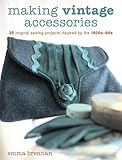
Emma Brennan’s book fits the mood of the moment, and also pays homage to the current fascination with vintage. Her 25 patterns for an assortment of handbags, hats and other accessories, are inspired by the 1920s to 1960s period. The designs are given a current twist by remaking in modern fabrics like wool tweed, polar fleece and fake fur.

The book assumes basic sewing skills, but gives clear explanations for many of the required techniques, such as fasteners, lining and pockets. Patterns are provided that require 200% enlargement on a photocopier.

Every time I flick through this book I find something new I want to make. I now have a burning desire to make a hat. I’m particularly attracted to “Iris”, a 1950s style hat with bow trim. The author describes it as a smart alternative to a beanie. It looks reasonably simple to make, and a good place to start my millinery career.  I was also delighted to discover that at 22 inches, my head is a standard size so all the patterns in the book should fit me perfectly.

With the help of this book I’m looking forward to creating several original accessories to provide the finishing touch to my outfits.


Wednesday, 12 January 2011

I'm Waiting For The Invitation


The Party Dress
Mary Adams

In A Nutshell: Design inspiration to create a unique party dress

I don’t have any party invitations on my mantelpiece at the moment, but I’m hoping Mary’s book will prepare me, should an occasion arise.

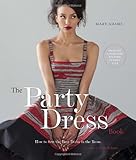
I was unfamiliar with designer Mary Adams, so this book was my introduction to her work. She has a distinct style, something akin to a prom queen with an edge. Imagine the singer Pink in a dress. It’s not a look for the pared down sophisticate. I enjoyed the sneak peek into Mary’s design background, and seeing the inspirations for her various collections.

To create a truly original design, Mary explains the techniques for several details that create the signature style for her work. She subverts traditional crafts like quilting and appliqué to create something exciting and modern. I was particularly enamoured with the layering of bias strips, to create a unique textured fabric. She also instilled in me a desire to sew ruffles on everything.

One could complain that this book comes with only one paper pattern, but that would be missing the point. Rather than be restrictive, this one design provides a springboard for endless creativity. The pattern in question has a fitted bodice with circle skirt, and comes in American sizes 4-14 (33” to 40” bust). Mary suggests three versions of her dress - Soaked Silk Taffeta, Cotton and Layered Silk Organza (detailed instructions are provided for the latter version).

Although titled a party dress, I think one made in a pretty cotton print would make a charming summer dress. I’m looking forward to re-creating some Mary Adams designer style for my holiday whilst I wait for my party invite.


Tuesday, 11 January 2011

Colourful Domestic Bliss


The Gentle Art Of Domesticity
Jane Brocket

In A Nutshell: Colour and kitsch combine with beautiful prose to provide visual inspiration for the domestic arts

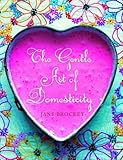
This book is based on Jane Brocket’s hugely popular blog “Yarnstorm”. Probably unlike many readers, I found the book before the blog, so was unfamiliar with Jane’s style and subject matter. It didn't take me long to understand the appeal.

Both constitute Jane’s original take on the gentle arts of knitting, sewing, baking and gardening, the pleasurable domestic milieu enjoyed by many women (including me). I feel I am stepping from a black and white reality into a fairytale world of exploding colour and kitsch. In my own crafting I am not a fan of such vibrant clashing colours, but I still appreciate the stunning photos, and how Jane translates inspiration to a finished piece of work. It is fascinating to see the shapes and pattern of an allotment become a flower and vegetable horticultural quilt.

This is a chocolate box of a book to dip in at random whenever you need a pleasure hit. Under the domestic banner there are a surprisingly wide range of topics – film reviews, art critiques and recipes all sit happily together with musings on socks, knitting and quilting.

Only one chapter is titled “Inspiration” but this is the underlying theme for the whole book. I do not want to replicate Jane’s colour schemes, but I will be taking more photos, and thinking much more of how the world around me can inspire my craft.


Monday, 10 January 2011

Practical Make Do And Mending


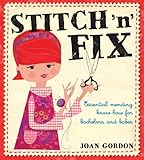
Stitch ‘N’ Fix
Joan Gordon

In A Nutshell: Beginner’s reference guide to mending using both hand and machine sewing

“Make do and mend” is becoming one of the key mantras of the day, and this book shows you how to do just this. It covers many basic repairs from buttons, zips, seams, hems, holes and a miscellaneous assortment of others – creating an hourglass shape in a shirt, removing a skirt waistband, and turning a pleat into a dart. It’s not exhaustive – I looked in vain to find how to shorten a sleeve but I can’t complain at lack of content. Each of the procedures is explained with clear instructions and accompanying photos.

This book is most useful to a sewing novice as it starts from the most basic level – how to thread a needle. I’m an intermediate sewer so already know how to undertake most of the processes. Saying that, I still learnt some useful snippets. I had not thought to tighten a gaping neckline by edging with blanket stitch, but this would be both useful and decorative.

A bonus of the book is that Joan suggests many quick fixes. A hem can be temporarily held up with staples, safety pins, or double sided sticky tape. Many repairs are explained using both hand and machine sewing. So all in all a great reference book for a novice sewer wanting to learn how to repair their clothes.