Tuesday, 30 November 2010

Beginner's Only


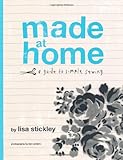
Made At Home
Lisa Stickley

In a nutshell: Basic introduction to home sewing with simple projects that would suit the sewing novice

Lisa Stickley has established a successful brand selling home textiles, china and bags. Now with this book, her fans can create homemade versions of her products. It is divided into two sections. The first part covers basic sewing techniques such as seams and inserting a zip. This is followed by several projects for household items to make grouped by kitchen, living room, bedroom and laundry.

As an intermediate seamstress, I found little to learn from the techniques section. In fact I wasn’t convinced that the author was an authority on sewing. I felt there were some glaring omissions from the techniques section such as making a mitred corner. On the plus side, the author’s trademark quirky illustrations are charming and the instructions are very easy to follow. But all the projects are basic, the only originality is in the use of Lisa Stickley’s own fabric designs. It certainly didn’t make me want to rush to the sewing machine.  This book would suit a complete beginner, but I would recommend Lotta Jansdotter’s “Simple Sewing” as a more interesting alternative. I borrowed Lisa’s book from the library and I will not be buying my own copy.



Classy Crochet


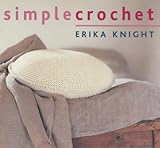
Simple Crochet
Erika Knight

In A Nutshell:
Timeless crochet patterns for the home combining simple stitches with interesting yarns.

Erika Knight states her aim is to keep crochet simple by combining simple stitches with a variety of different yarns. She wants to make crochet modern and interesting, and, by and large, I would say she has succeeded.

In the first part of the book, instructions explain how to make the basic stitches, work in rounds, add in new yarns and finishing off. As I can already crochet I cannot say if a complete novice could follow them, but the photos are clear and helpful.

The projects themselves are the real reason to buy this book. Knight has mostly used a subtle, neutral colour palette that gives the designs a classy, timeless quality. The patterns are all for stuff for the home – cushions, throws, containers and items that would make good gifts such as slippers and a cafetiere cover.

Knight creates texture with different materials using string, raffia and rag strips, alongside more conventional wools. There is clever use of crochet’s properties to produce a firm fabric with her container designs. Most of the patterns are easy, the interest created with the yarn used, rather than complicated stitches. For example, the textured cushion in a lurex yarn would be easy enough for a beginner.

On the negative side, I would say beware of the cost of some of the items. Said cushion would cost around £40 using the yarn suggested, though cheaper substitutes can be found. Though there are several projects using string and raffia which would be more budget options.


I made the afghan blanket when I was learning to crochet. A very traditional pattern but ideal for a beginner.

The photos are lovely, bringing out the textures of the yarns. But I feel some clarity has been sacrificed for effect. It’s not always possible to see an object clearly. There are some attractive close-ups of the table runner but the overall view has been artily blurred.

But these are minor criticisms. I would recommend this book as an excellent addition to a crochet library.


Thursday, 25 November 2010

Something For The Weekend


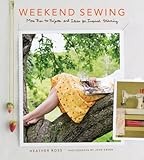
Weekend Sewing
Heather Ross

In A Nutshell:
Simple, weekend inspired sewing projects with interesting twists.

Heather Ross takes her inspiration from the weekend, both as a time to sew, and to use the projects in this book.

It starts with some good tips on designing a sewing space. Wish mine looked like the one shown in the book!

The 40 projects provide a great selection of items for women, children and the home. They are often very simple, but with a twist to make them special. I have made the headscarf which has a hidden elasticated insert that transforms it from frumpy to fashionable. Though admittedly it would suit a younger woman more than me! I’ve earmarked the summer blouse as a project for next year.

One point to note is that the clothing patterns are only suitable for women of a certain size (36” to 42” bust), unless you are adept at altering. Full sized paper patterns are provided so there is none of that pesky printing out used by some books.

This book does have some lovely photos – they have an aspirational lifestyle quality but still give a very clear view of the item.

There is a final chapter on sewing basics. This includes a great tip on choosing fabrics, and the difference between drape and body to create the silhouette you want.

All in all, a useful sewing book with something for both the beginner and experienced sewer.

Knitting Expert-Ease


Stitch ‘n Bitch Superstar Knitting
Debbie Stoller

In A Nutshell
: Advanced knitting techniques explained with flair and humour, accompanied by 41 fun patterns

I ordered this book from Amazon back in March so it’s been a long wait. Was it worth it? Probably.

I’m the perfect target audience for this book. I’ve mastered basic knitting skills and are tentatively exploring the brand new worlds of multiple colours, lace, cables, and perhaps even creating my own designs.

I’ve taught myself many crochet techniques from Debbie Stoller’s “The Happy Hooker”, and find her a brilliant teacher in both knitting and crochet. Her explanations are very easy to follow, and humorous prose a joy to read.

This book has three main sections – one covering stitch techniques, secondly how to create your own patterns, and lastly 41 patterns illustrating many of the techniques covered in the first section. As I am in the midst of knitting an intarsia cardigan, I read the intarsia chapter in detail to ensure I was doing everything correctly. I was relieved to find I was doing nothing fundamentally wrong but I picked up some great tips. I learnt I should work with short lengths of yarn. With 100% wool I could “spit splice” yarn together to join in a new piece of yarn. When adding in a new colour it’s a good idea to leave ends dangling from the front, rather than the back, so they do not become tangled up with the yarn in use. I was also relieved to learn that my loose stitches near the colour changes are unavoidable and the only solution is to manually adjust each individual stitch. This one chapter alone has been worth the price of the book. I will be consulting the other chapters on cabling, beading, lace, stranding and stripes as I need them.

There is a good selection of patterns but none have jumped to the top of my “To Do” List. They are all styled very prettily, though it would have been nice to see some of the designs on older models. The bios of the contributing designers are always fun to read.

My first impression of this book is that it is a good addition to my knitting library, and I will be using it extensively to develop my knitting skills.

Tuesday, 23 November 2010

Craft In The Home


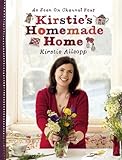
Kirstie’s Homemade Home
Kirstie Allsopp
In A Nutshell: More style than content, but perfect for Kirstie fans and does provide inspiration for bringing homemade shabby chic to your home

I love watching Kirstie on TV, despite the fact I know I am being shamelessly manipulated. She lives in a charmed world where wonderful second hand furniture always materialises at a bargain price. Craftspeople wave their magic wands and enable Kirstie to succeed at crafts that normally take years to perfect. Despite this illusion, I think the basic message of the show is sound – furnish your home by buying second hand or making stuff yourself. And Kirstie is such an inspirational ambassador. Who can resist her head girl bossy charm and “if someone as inept as me can do it, why can’t you?” Personally I think the lady doth protest too much, and I am sure she is supremely efficient at everything she tries.
The book accompanies the TV series, and is divided into two main sections – the first half comprising Kirstie’s tips for furnishing a home, room by room. This includes using recycled kilner jars as hanging lights, using antique quilts as wall hangings and using patterned or floral tablecloths as they are less likely to show spillage. This is followed by a pick and mix assortment of 25 projects for items that have appeared on the TV show. A diverse range of crafts are represented – sewing, cake decorating, soap-making, napkin folding and upholstery. For more complex crafts such as stained glass, pottery and spinning, the advice given is to seek out a course. The stunning photos considerably enhance this book, providing endless inspiration for creating the vintage shabby chic look Kirstie advocates.
Personally I feel the first half of the book is more successful. Kirstie’s personality and real life expertise working in property comes through, so there are useful tips amongst the fluff. The projects themselves are presumably provided by the craft experts as they are not topics on which Kirstie could write with authority. I’m not sure I would be inspired to make anything included in the book, but may seek out another book where the craft is explained in more detail. This is a book for die hard Kirstie fans where her special brand of style triumphs over substance.

Bohemian Homemade Style


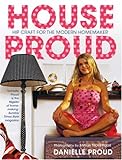
House Proud – Hip Craft for the Modern Homemaker
Danielle Proud

In A Nutshell: Inspirational guide for injecting eclectic crafty style into your home

Kirstie Allsopp may be currently popularising the homemade home on TV, but Danielle Proud was in there first. The cover describes Danielle as the Nigella of homemaking, but looks-wise she has more of a Sienna Miller vibe, exuding effortless, laid-back bohemian chic. I am in complete awe of Danielle’s range of skills as a diverse number of crafts are in this book - tiling, resin, upholstery, sewing and macramé to name but a few.

The projects are themed by rooms in the house and would generally suit someone whose home has an eclectic vintage style, rather than sleek, minimalist urban leanings. But they are all quirky and creative, even if I wouldn’t want them all in my house. My personal favourites are the wooden vogue placemats, the Pirate’s Treasure Chest resin tabletop (fantastic use of old jewellery), and I loved the photo ideas. At the other end of the scale I found the macramé hanging and rag rug a little homespun.

Danielle’s personality shone throughout this book. I loved her have-a-go attitude and it encourages me to think I could make stuff I would not have thought of. Before buying anything else for my home, I will always try to ask “Could I make it myself?” This book is much more useful on a practical level than Kirstie’s Homemade Home.

Thursday, 18 November 2010

Re-Making and Reinventing


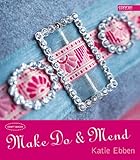
Make Do & Mend
Katie Ebben


In A Nutshell: A slim book but full of ideas for reusing and reinventing old clothes with basic sewing techniques 

This book was first published in 2005, and it was probably a touch ahead of its time. Its philosophy is about taking a “creative and resourceful approach to life, learning to recycle your possessions, and not discarding them until they really have outlived their usefulness.” In the current economic downtown, even the most ardent shoppers are forced to re-evaluate their habits and consider a more make do and mend approach.

Katie Ebben attempts to modernise many traditional skills and covers techniques such as darning, hemming and patching. I thought the instructions for darning were very clear and helpful. This may sound a little dull and worthy but besides explaining basic techniques, this book is sprinkled with some lovely ideas. It contains 18 projects to wear and for the home, themed by trimming, patching, hemming, darning and disguising, customising and reinventing . Most are relatively simple, and should be achievable by anyone with basic sewing skills. So you can embellish a top with ribbon or sequins, make a patchwork cushion, or a floral appliqué skirt (not unlike one I bought from an expensive boutique). Of course, not all the projects are to my taste, but many spark ideas. I love the idea of “reusing elements of clothing in this manner is a way of keeping things you love around you. In this vein, the project I intend to make is reusing an old lace mini skirt to make an evening bag. I had many fantastic evenings wearing this skirt, but is now far too short for my forty something self. By remaking it, I can extend its life and hold onto the memories.

This is quite a slim volume, and my main complaint is that there is not enough in it.

Wednesday, 17 November 2010

All About Fabrics And More


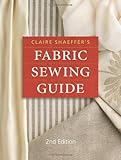
Fabric Sewing Guide
Claire Shaeffer

In A Nutshell: Invaluable reference book, dense with fabric information and sewing techniques

Many of my sewing disasters have stemmed from an incorrect choice of fabric so I am hoping this book will minimise future errors.

I was fascinated recently to read in the recent “Teach Yourself to Sew” magazine published by Taunton that Claire Shaeffer had started her career in the circus. The entertainment industry’s loss is sewing’s gain as she certainly knows her stuff. The title of this book does not do justice to its content. It is dense with information, not only a comprehensive reference book about fabric, but chock full of useful sewing techniques.

I recently purchased some silk chiffon to make a blouse. Although a beautiful fabric, I could tell it was not going to be easy to work with, so I checked out Claire’s advice.

The information on fabric has been divided into two chapters – one on fabric content and one on fabric structure. This means there are two ways I can look up my particular fabric. Firstly it is under “silk” in the Content Chapter, or alternatively as “Soft and Sheer” in the Structure Chapter. With both methods I am given a mass of information on how to use the fabric, including how to cut the fabric out, what machine needle to use, the stitch length and several possible seams. I am not surprised to find Claire believes my fabric is one of the most difficult to sew, though I pick up several useful tips. For example, I have to secure the threads at each end of a seam with a knot, rather than backstitching.

I next go to the chapter on sewing techniques, so I can find out more about some of the techniques Claire has suggested. I want to know how to create a standing fell seam, one of the types recommended for my fabric. I not only found how to do this particular seam, but many more I never knew existed. I feel quite depressed at my lack of sewing knowledge, though it is bound to improve if I constantly use Claire’s book.

My main criticism of this book is the lack-lustre photos. Considering this book was published in 2008, the designs featured are old-fashioned and uninspiring.

Despite this drawback, this book is one I intend to refer to whenever I start a new sewing project. My silk chiffon will still be difficult to work with but I am confident I am tackling it in the most effective way.

Saturday, 13 November 2010

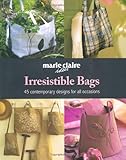
Bagging It Up


Irresistible Bags
Marie Claire Ideas

In A Nutshell: A gem of a book with 45 wonderful ideas for homemade bags combining interesting materials with a variety of crafts

Bags have achieved cult status in the fashion world where some iconic brands have a waiting list of months and a price tag more than most people’s monthly salary. This book will not get you any closer to a Hermes “Birkin” or a Mulberry “Alexa” but it does provide 45 wonderful ideas for homemade bags that will not leave you out of pocket. Make the “Silver Diamonds” sequinned evening bag to provide the perfect finishing touch to a party outfit. Or if you would rather tackle something more practical, how about some rather striking saddlebags for your bike? A whole host of different crafts are brought into play - sewing, knitting, crochet, appliqué and embroidery – so there should be something of interest, whatever your creative preference. This is combined with imaginative use of a variety of materials – tarlatan, tartan silk, beads, sequins and leather – to make some unique creations. Some projects can be whipped up in a couple of hours, whilst others will require more time and patience.

This book is not without fault. It would be improved if there was a short text description of each bag, as it is not always possible to glean everything you need to know from the photo. The instructions would also benefit from diagrams as I did not always find them easy to follow.


As someone who has developed intense plastic carrier bag phobia on my supermarket trips I decided to make the hessian “Spring Collection” shopping bag. I am happy with the finished result but did find the open weave nature of hessian difficult to work with. It frays very easily so I would use an alternative fabric in future.

I may never own a designer bag but at least I have a homemade original.


Thursday, 11 November 2010

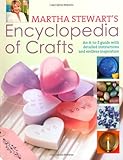
A Glittering Craft Book


Martha Stewart's Encyclopedia of Crafts

In a Nutshell: A must have for the craft library with clear instructions and stunning photos for a multitude of stylish projects.

A book from the mighty goddess of American crafting has a lot to live upto, but this hefty work fulfilled my high expectations.

I’m probably stuck in my craft comfort zone of sewing, knitting and crochet, but this guide sent me down surprising new alleyways.

The book covers 30 craft techniques from traditional favourites such as candlemaking and beading through to the more unusual practices of quilling and rope coiling. The how-tos are very clear, easy to follow, and accompanied by stunning photos. Just enough information is given in each section to whet your appetite and start crafting. The projects are lovely – elegant, modern and stylish. Stuff you would really want to make. And many do not require a high initial outlay – they are based around found objects like pinecones and shells. I also loved the reinterpretation of childish crafts like potato printing.

Martha Stewart has something of a reputation for glitter so I decided to try out one of the ideas in the "Glittering" chapter. This was a very simple idea but brilliantly effective - sticking double-sided tape on a lugguage tag and applying glitter. It creates a beautiful glittery straight line with no mess whatsoever.


I was so enamoured with the idea I've decided to use it to make my Christmas cards.


This is a book to return to again and again, whenever you feel in need a shot of creative inspiration.


Tuesday, 9 November 2010

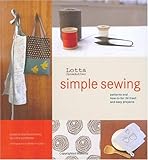
Sewing Scandinavian Style


Simple Sewing
Lotta Jansdotter


In A Nutshell: Simple but sleek and stylish sewing projects that will bring Scandinavian charm to your home

Scandinavian born, self-taught designer Lotta Jansdotter aims to provide readers with useful and uncomplicated sewing projects. 24 are included in this book (10 with pattern sheets provided), themed by “Cook”, “Go”, “Nest” and “Organise”. There should be something to appeal to everyone with a diverse range of items including a sunhat, a yoga mat and a magazine holder.

I think the designs are lovely, reflecting the cool, clean lines of Scandinavian style. They are simple and straightforward, but often with interesting twists that elevate them out of the ordinary. The picnic placemat has practical pockets and a ribbon that make it decorative but inherently practical.

The projects are graded 1-4 in terms of difficulty level. I jumped straight in and made the reversible apron, classed as a “4”. It took a little time to make but I had no problems whatsoever, giving me confidence I could make anything in the book. The apron has a paper pattern provided, and I was impressed with the design. It has a lovely fitted shape that is extremely flattering, giving me that domestic goddess feeling.

This book would suit both beginners and more experienced sewers. I would definitely recommend it.


Sunday, 7 November 2010

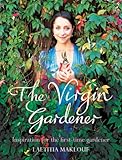
Gardening Becomes Crafty


The Virgin Gardener
by Laetitia Maklouf


In A Nutshell: Beautiful photos, engaging text, and a gorgeous author who will inspire you to both craft and grow.

You may feel it’s strange I’m including a book about gardening on my craft book blog, but bear with me.

This book has a menu of projects grouped under such themes as decorate, drink and luxuriate. All have some connection to plants, but there are many that offer inspiration for the craft enthusiast. I’ve already encouraged my partner to make me a “twiggy grid” (he is better than me at knots). I think this is a lovely object in itself, but is particularly beautiful when used to arrange flowers. Other makes I’m planning in the future are the cheap vases, hanging jam jars, and a Christmas wreath.


One of the joys of this book is the gorgeous photos, many of the beautiful author. She effortlessly makes wellies and muddy hands appear the epitome of glamour. And I have to concede, she not only looks good, she writes in a very engaging and encouraging way that is endlessly inspiring. In fact, if you don’t have an interest in gardening before reading it, you probably will by the end.


Thursday, 4 November 2010

Seamless Crochet


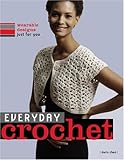
Everyday Crochet
Doris Chan

In a nutshell: A great range of crochet patterns using seamless construction to create pretty wearable garments.

With her distinctive top down, seamless construction, Doris Chan shows you how to create a variety of garments.

There are 25 patterns in this book, though admittedly are all a variation on a theme. The advantage of this is that you can mix and match from the different designs to create exactly the garment you want. I have made several of the designs and they definitely work. The lacy camisole is something of a compliment magnet.


The top down construction used throughout can be tricky when you first start (perhaps some diagrams would have been helpful here?). Do persevere as once you get going, it becomes much easier. I think the shell patterns used throughout have the benefit of looking much more complex and intricate than they actually are.


Doris Chan also provides some super ideas for belts and closures. The button and bead fastening is not only very pretty but a practical option for the soft nature of crochet fabric.


The photos in this book are clear and give a very good idea of the finished product, but I found them dull. There is little inspiration as to how these could be styled in a fashionable way so you have to use your own imagination. Though this is the main drawback in a work that represents a valuable addition to the crochet bookshelf. I’ve used it several times.