Thursday, 27 January 2011

Endless Inspiration


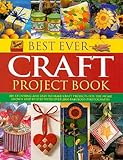
Best Ever Craft Project Book
Edited by Lucy Painter

In A Nutshell: Hundreds of craft ideas to suit all tastes and skill levels

I found this book in a charity shop for the absolute bargain price of £1.50, less than the price of a Sunday newspaper. It contains a mammoth 300 projects, organised into seven crafting groups including paper crafts, stencilling, embroidery, appliqué, modelling, woodwork and decorating glass.

With so many projects stuffed in, understandably some of the instructions are quite sketchy. However they will satisfy a range of skills, many easy enough for a child, others requiring the painting ability of a Picasso. There are some very innovative ideas. I remember doing paper mache on a balloon as a child. Here it is reinvented in a stylish modern way to create a jug resembling a modern Italian ceramic.

As a bonus, the book includes a great selection of templates that will have a multitude of uses, not necessarily the one applied in the project. A fish motif is used on a painted tile, but could equally become an embroidery pattern

This is a brilliant book to flick through for ideas. If anything, there is too much choice, as I’m finding it difficult to settle on one project


Wednesday, 26 January 2011

Not A Fit For Me


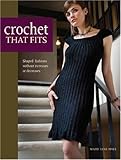
Crochet That Fits
Mary Jane Hall

In A Nutshell: Hit and miss crochet patterns shaped with different height stitches

Mary Jane states her aim is to create fitted and fluid crochet designs without the need to do any shaping. She achieves this by making stitches of varying heights on the same row. 33 designs, including bags, headbands, belts, dresses and tops illustrate the system.

There are some interesting patterns, but the choice of colours and styling fails to “sell” the designs. A striped sleeveless turtleneck sweater has been made in a truly awful stripe combination. You need to be able use your imagination to visualise different colours and wools.

I bought this book specifically for the baby-doll top pattern. I made the top half without any problem. It’s made in one piece, using crochet in the back loop only, to create a bodice that will stretch to fit around the bust. This worked well, and was easy to adjust for a good fit. Problems arose when I commenced the lacy lower half. The graduated effect is achieved by starting with double crochet and working up to double trebles. How I hated making those double trebles. And I didn’t like the overall effect at all. I don’t abandon many projects, but this is one of them.

I had more success with the flared tweed hat, albeit using a non tweed yarn. The graduated technique worked better here. I quite like the finished hat, though it’s a little floppy, and I intend to add a band, rather than the flower used in the pattern.

Personally I don’t have any problems in shaping crochet the normal way, and prefer it to Mary Jane’s method of different stitch heights. But I’m pleased to have learnt the technique, and may come back to it in the future.


Tuesday, 25 January 2011

Woolly Inspiration


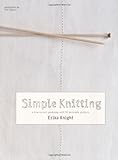
Simple Knitting
Erika Knight

In A Nutshell: Beautifully illustrated how to knit book with patterns that progressively build on skills

I recently reviewed “Purls Of Wisdom” by Jenny Lord, so I was interested to compare it against this one by Erika Knight, as both are aimed at teaching beginner’s how to knit. I think I would have been able to teach myself from either book as they both clearly explain the basics.  Erika’s book is much more lavishly illustrated which for me gives it that inspirational edge. The photos of knitting samples in lovely, natural earthy shades appear almost touchable, and motivate you to immediately pick up your needles.

“Simple Knitting” contains 20 patterns designed to progressively build on skills. This means starting out with a garter stitch scarf and ending with a very desirable classic ‘V’ neck cardigan. Projects are given a 4 scale difficulty rating, but even the “experienced” knits could be tackled by a relative beginner with patience and help.

Jenny’s book has a less desirable, more random collection of patterns, many intended to be gifts. However, she does but provides better background information on knitting as a craft, and some very useful internet resources.

Erika’s book will inspire the novice knitter by its strong visual element, whereas “Purls Of Wisdom” is more about the text. I don’t think either would disappoint a beginner.


Monday, 24 January 2011

Knitting Through The Seasons


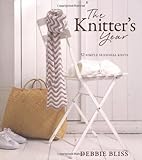
The Knitter’s Year
Debbie Bliss

In A Nutshell: Seasonal stash busting ideas but wide variability in the quality of the patterns

I love the concept of this book – a knit for every week of the year. Consequently the 52 projects are divided into four seasonal groups, and intended to be doable within seven days.

The issue I have is that by keeping to this strict timescale, some of the ideas hardly amount to a genuine pattern. There is a pompom garland which simply constitutes making five pompoms. Another, a belt, is basically a knitted strip in garter stitch. Admittedly this has the addition of a ribbon which elevates it into a more interesting design, so becomes a good way of using up oddments of wool.
Debbie has been lazy with several of the designs and not given them enough thought. Saying that, with so many projects in the book, several of the knits are bound to appeal. My particular favourites are the striped gloves, beret and lacy scarf.

This is a good book to flick through for stash busting or gift ideas, but there are not enough good patterns for me to want to buy it.


Friday, 21 January 2011

Creating A Paper Mountain


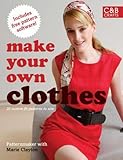
Make Your Own Clothes
Marie Clayton

In A Nutshell: Classic patterns that can be custom-sized, but require patience to print out and use.

I’d forgotten I even owned this book, until I recently came across it on my bookshelves. It basically contains 20 patterns (two are for children). These are divided into four sections, with progressive levels of difficulty. So the first chapter is an introduction to basic seams and gathers, starting with a simple wrap skirt. The last section has moved onto tailoring with a final project of a shawl collared jacket.

The patterns are basically classic shapes so wouldn’t appeal to anyone with high fashion aspirations. I am tempted to make a few, including a beret, tailored blouse, and tie front tunic.

Both the advantage and drawback to this book is the patterns are provided on a CD. This enables you to enter your own measurements and create custom fit patterns. Unfortunately you then have to print out the patterns yourself and stick all the sheets of paper together.

I tried printing out the beret pattern, on the basis that would lose the least amount of paper. The software is reasonably easy to use, though not entirely intuitive. There is the opportunity to move the pattern pieces around to minimise pattern usage. Fabric requirements are provided but you need to work out your own pattern layouts. I think a beginner would struggle without help so this book would most suit someone with some sewing skills.

Now I’ve rediscovered this book, I will be using it, even if it’s just to make the beret.


Thursday, 20 January 2011

Visual Magic


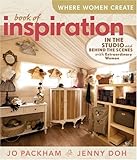
Where Women Create:
Book Of Inspiration

Jo Packham and Jenny Doh

In A Nutshell:  Stunning photos and practical tips for designing a creative workspace

This book is for any woman who has dreamed of a personalised creative space of her own. It features an eclectic mix of knitters, painters, designers and assorted artists from around the world and peaks into their working world. This is a visual Viagra with luscious photos to stimulate the imagination.

But the accompanying text also provides practical tips from each of the featured artists on organisation, and exercises for fuelling creativity. It was interesting to note that different artists would often have the same suggestion. It may sound prosaic in a creative environment, but several mentioned that having deadlines (real or artificial) imposed structure and kick started creativity. Many also said they liked to keep their working materials on display for constant visual inspiration. As an exercise to fuel creativity, an oft repeated suggestion was to design for a character from a film, show or TV programme.

Dip into this book at random and experience serious lifestyle envy. A treasure trove of ideas to plunder for your own use.


Wednesday, 19 January 2011

Laudable But Lacklustre


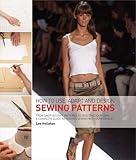
How To Use, Adapt and Design Sewing Patterns
Lee Hollahan

In A Nutshell: Useful but uninspiring book providing the know how to make a selection of pattern alterations.

I think a good craft book should provide both nuts and bolts of the practical skills required, but also inspire with desirable projects that you itch to start. Lee Hollahan succeeds with the first, but fails with the second.

Admittedly she covers some very useful ground. The first section deals with basic sewing kit, choosing fabric and using a commercial sewing pattern. It takes you through pinning, marking and cutting out. There are instructions how to make basic pattern alterations such as altering the bust at the seams and changing trouser length. This is all something of a whistle-stop tour, but would suit a beginner.

Lee then moves onto designing your own patterns using blocks, either commercial ones, or scaling up the gridded ones included with the book. She demonstrates how to fit a toile, and make more advanced pattern alterations. These are not exhaustive. For example, the advice on increasing the bust area differed from other methods I have seen.

The most interesting part of the book is the section on adapting the basic block to design your own patterns. Lee provides guidance for various style variations such as changing bodice darts into seams, creating a half circle sleeve and adding a yoke to a skirt.

This is a book I will be referring to occasionally, but is unlikely to become a well-thumbed favourite.